

Colour
- Photography · Colour extraction
- 2018 to present
- Solo
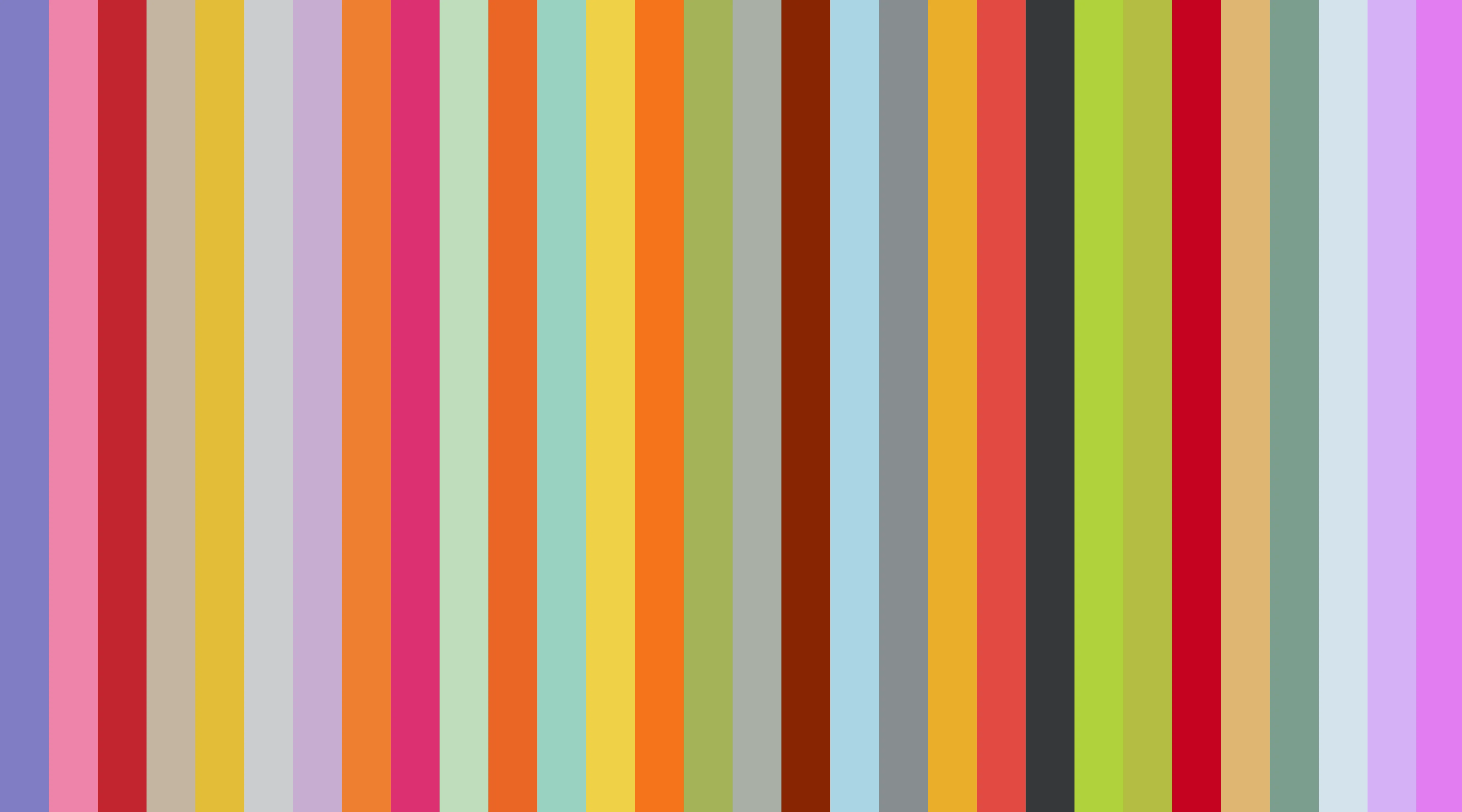
Since 2018 I’ve been collecting colours that make me stop walking. Each photograph gives me one tiny square and a name for the library. There are thirty so far.
30
8
1
Thirty colours in eight years.
There is no schedule. I add one when a colour catches me hard enough that I’m still thinking about it later. It works out to about four a year.
PAINTED NETTLE
#DD3072 · 43.66148° N, 79.41515° W
I had just left pharmacy and had no idea what came next.
I was walking through High Park with nothing figured out when I found a Japanese maple in full bloom. I took a photo of the red. It was the first one, and it is still the one I think about.
One colour has to carry the whole photograph.
Most of a photograph is sky, pavement and shadow. I sample a ridiculous number of pixels until one tiny square makes the whole thing come back.
When a colour won’t behave

Some colours refuse to cooperate.
Sometimes I sample half the photograph and every option feels slightly wrong. Those ones stay in the camera roll. The satisfying little click is the whole point.
So far, thirty photographs have made it in.
I write down enough to find the moment again.
Every entry gets a name and a location. I save the hex, RGB and CMYK values so I can use the colour again. LOBSTER ROLL came from a Montreal side street. QING BRICK came from a pagoda in Shanxi. The numbers rebuild the colour. The name and coordinates take me back to where I found it.
What each field carries
The name takes the longest.
Hex, RGB and CMYK are easy to calculate. Naming the colour means finding the detail that made me stop, then writing down where it happened.
A name and a location can turn a swatch back into an afternoon.
No two people see the same red. That is the fun of it.
Ask two people to pick the red from the same photograph and they will point at different pixels. Good. The disagreement is half the fun, and it is why I am still doing this eight years later.
Thank you.